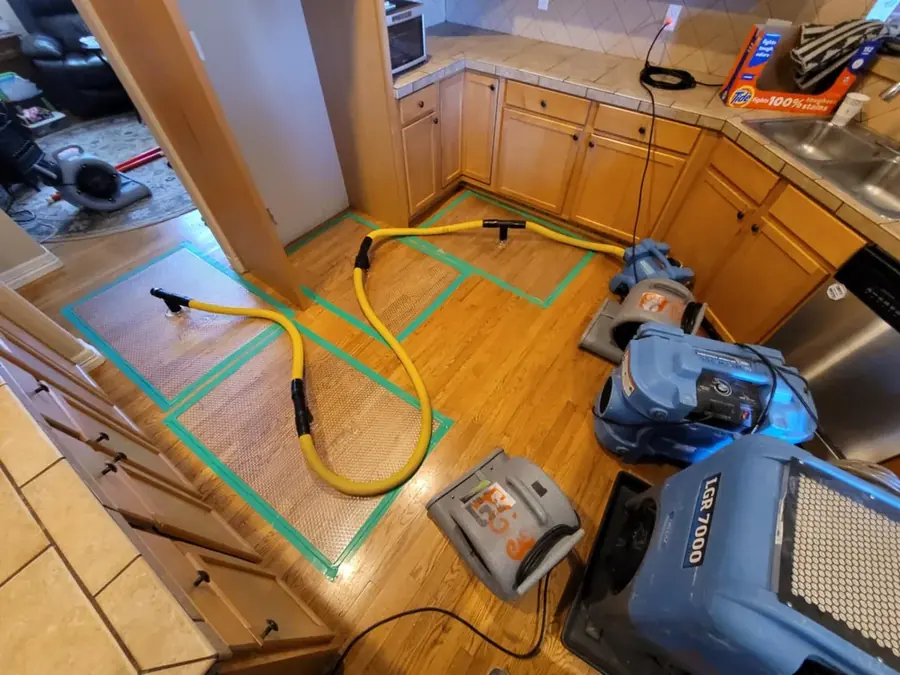
Most La Grange water heaters sit in the basement, so when a tank rusts through or a relief valve lets go, the water runs straight across the lower level and into whatever is finished nearby. A forty or fifty gallon tank does not just empty once, it keeps refilling and running until someone shuts the supply. Crews dry the utility room and the finished space the water reached.
How water heaters fail here
- Age and rust: most tanks last 8 to 12 years, then the bottom corrodes through
- A stuck temperature-and-pressure relief valve that dumps water
- A failed drain valve or a corroded supply connection
- Sediment buildup that overheats and cracks the tank
A tank failure is a different job from a burst supply pipe or an appliance hose failure, but the response is the same: stop the water and dry everything it touched.
The water heater flood response
- Help you shut the water supply to the tank and stop the flow
- Extract the standing water from the utility room and adjacent space
- Pull wet baseboards and open cavities so the framing can dry
- Run drying equipment to a verified reading and document the loss
the EPA's leak guidance explains how small tank leaks turn into big losses, and University of Illinois Extension publishes home-maintenance guidance for Illinois homeowners.
Water heater flooding the basement? Shut the supply valve on top of the tank if you can reach it, then call now. A La Grange crew is on the way.
☎ Call (708) 834-6294Getting ahead of the next tank
- Know the age of your tank, and plan to replace it near 10 to 12 years
- Flush the tank yearly to clear sediment
- Put the tank in a drain pan piped to a floor drain
- Watch for rust at the base or moisture around the fittings
A drain pan buys you time
A water heater in a pan piped to the floor drain turns a slow tank leak into a harmless trickle down the drain instead of a flooded rec room. On an older tank, it is cheap insurance while you plan the replacement.