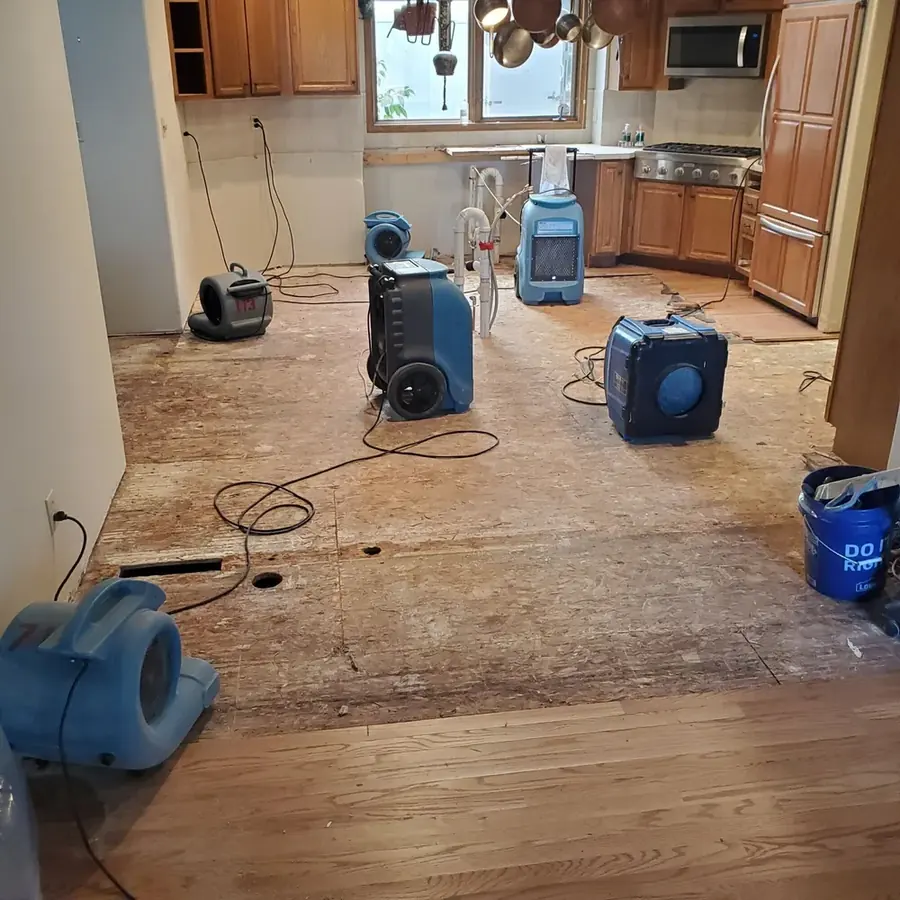
The braided hoses and small supply lines behind your appliances are under pressure all day, and when one fails it can run for hours before anyone notices. A washing-machine hose, a dishwasher line, a refrigerator ice-maker line, or a water-softener connection can flood a laundry room, a kitchen, or the finished space below. Crews extract the water and dry everything it reached.
Where appliance leaks start
- Braided washing-machine hoses that split or blow off under pressure
- Dishwasher supply lines and door seals
- Refrigerator ice-maker lines behind and under the unit
- Water-softener and utility-sink connections in the basement
A small supply hose is a different failure from the tank on a water heater or a line in the wall that burst, but a hose that runs all day while you are at work can do just as much damage.
The appliance leak response
- Help you shut the valve behind the appliance and stop the water
- Extract from the floor, and from the ceiling below if it drained down
- Pull the appliance and dry the cabinet, subfloor, and wall behind it
- Run drying gear to a verified reading and document the loss
the EPA's leak guidance points out that a failed supply line is one of the most common home water losses, and fast extraction keeps it from wicking under the cabinets and flooring.
Appliance hose let go and water is spreading? Shut the valve behind it if you can, then call now. A La Grange crew is on the way.
☎ Call (708) 834-6294Preventing the next one
- Replace rubber washing-machine hoses with braided stainless, and swap them every 5 years
- Shut the washer valves when you travel
- Check under the sink, fridge, and dishwasher for slow drips
- Consider a leak-detection shutoff for the laundry or the whole home
The hose behind the washer is on a clock
A rubber washing-machine hose is one of the most common water losses in an older home, and it always seems to let go while the house is empty. Braided stainless hoses and a habit of closing the valves when you travel take that risk off the table.