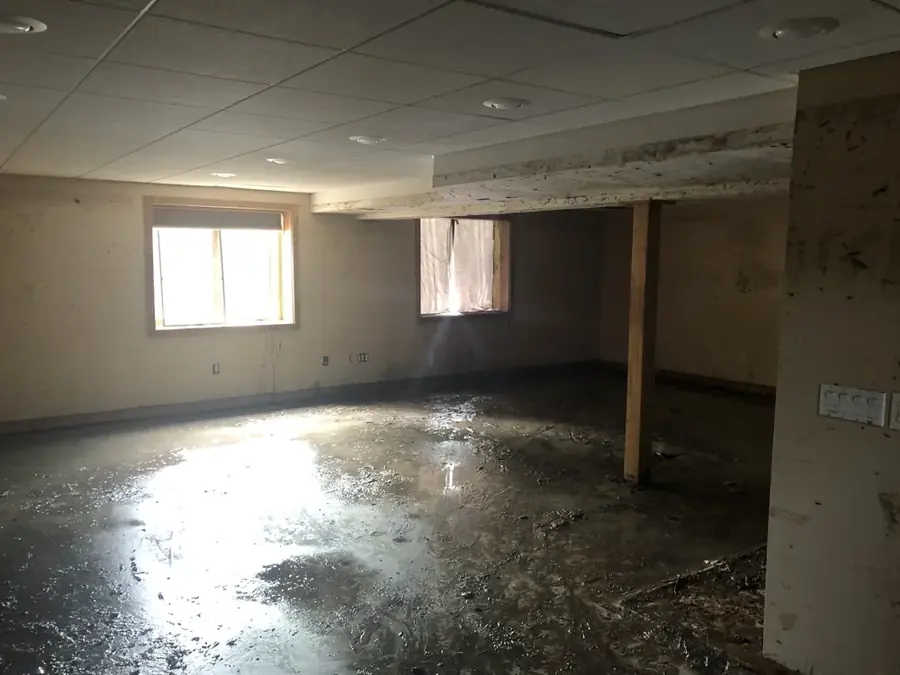
A sump pump is the one machine standing between a high western-suburbs water table and your finished basement, and it tends to fail exactly when it is needed most, during a heavy storm when the power flickers and the pit is filling fast. This page is about the pump failure itself and the flood it lets in, which is a different starting point from general storm or ground water.
Why sump pumps fail in La Grange
Most failures come down to a few things:
- Power loss in the storm, with no battery backup to take over
- A stuck float switch or a pump that simply wore out
- A pit that fills faster than a single pump can move water
- A frozen or clogged discharge line that sends water back into the pit
Once the pump is beaten, the water that comes in behaves like any basement flood, so the response is fast extraction and thorough drying before it wicks into the finishes.
The sump failure response
- Extract the standing water the failed pump let in
- Pull or float wet carpet and pad and check the finishes
- Dry the framing and wall cavities to a verified reading with extraction and drying gear
- Document the loss for your claim and point you to a backup plan
Ready.gov flood guidance covers safe steps around a flooded basement, and University of Illinois Extension offers practical guidance on keeping an Illinois lower level dry.
Sump quit and water is coming up? Stay off the wet floor near outlets and call now. A La Grange crew is on the way to pump it out and dry it.
☎ Call (708) 834-6294Keeping the next storm out
Once the current loss is dry, a few upgrades keep a dead pump from meaning a flooded basement:
- A battery backup pump that runs when the power is out
- A second pump in the pit for heavy inflow
- An alarm that tells you the water is rising before it spills
- An annual test of the float, the check valve, and the discharge line
Test your sump before storm season
Pour a bucket of water into the pit and watch the pump kick on and clear it. If it hesitates, hums, or the float sticks, replace it before the next storm, not during it. A backup pump pays for itself the first time the power blinks.